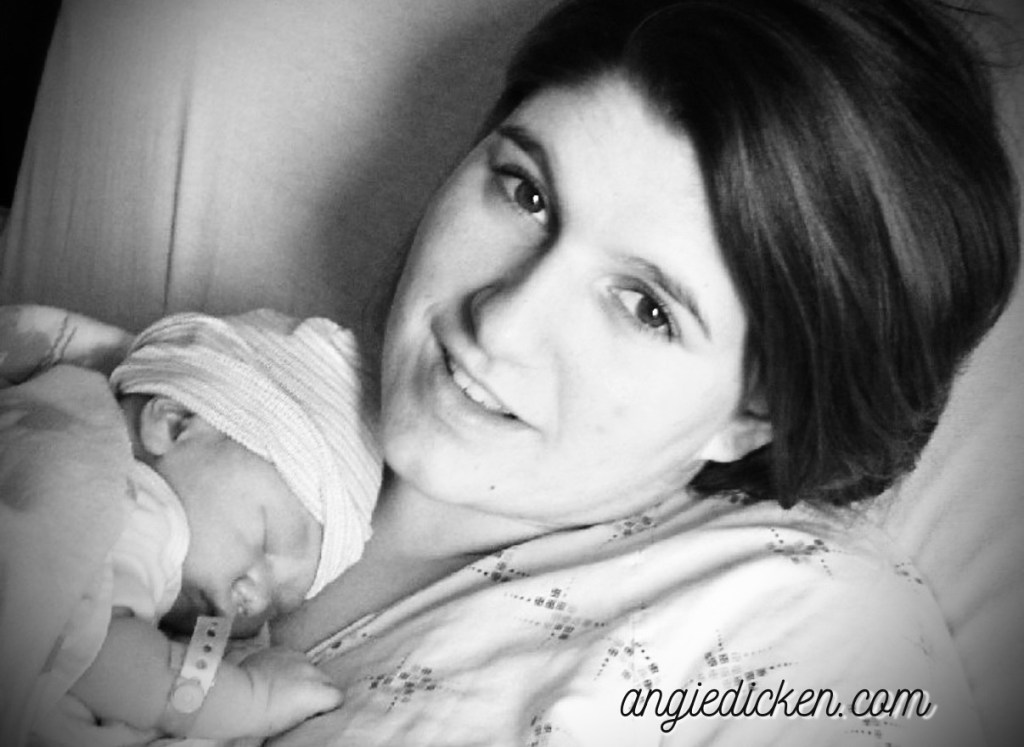
My greatest goal with those colicky babies was to take away the pain. Rubbing their tummies, finding home remedies, even cutting out allergens from my own postpartum diet for weeks and weeks.
As they grew, taking away discomfort wasn’t so simple. Mothering became more of truth-speaking in the midst of the pain…hurt feelings from conflict with friends, sibling rivalry, not being chosen for that sought after team.
Truly, their struggle often stabbed me in the gut. Justice is rooted in my core, even in the small stuff. Instinctually, I strive for wrongs to be made right. Especially when it comes to my kids.
But now they are mostly grown, and my hope in taking away the pain gives way to the sobering fact: a mama doesn’t really have that power in the end.
Recently, my child encountered one of the deepest hurts of their life so far, My previous tactics— pretending to be above their pain even if I was reeling on the inside, the effort of pouring out wisdom in the midst of their wounds, all the energy, secret tears, and constant empathy…all that surely has prepared me for this moment of facing sorrow on a grown up scale.
If only. Not so much.
And as much as I want to push my kid along to find okayness again, I know the journey ahead far too well. It’s not an easy obstacle, and it’s definitely not quick. Loss and heartache cling relentlessly. And even as their mama, their biggest advocate, I have no power to tame it outright.
All I can do is wait in the shadows of their pain and be available when they need me.
And all the while, I am absorbing some of the grief too. Because, after twenty-three years of parenting, the greatest consequence of mothering is bearing their grief far more than my own. Yet, that inevitable burden is worth it. For my babies. The ones I love with all my worn-out heart.
Lately, I have grown less patient with the neck bend. The lowered eyes disconnected, engrossed, and the completely mindless scrolling of those around me—especially my family members.
I once took a Cultural Geography class in college, and I recall the professor saying that we are at the peek of the computer age…that there really isn’t much more that can be done with the desktops of our time. Yet, nobody had experienced the smartphone, the platforms of social corruption—aka social media—nor the newest craze—AI.
I think we were in the glory days of technology back in the 20th century. It’s maybe taken a dangerous slip down a slope of steep proportions.
Scary stats are sprouting.
Consequences of our technological advances are beginning to emerge, and the social travesty of our constant worship of progress and pixels will surely become one for the history books. There is hope, as some are beginning to take steps toward limiting the exposure, especially in children. But too many adults are reckless, and as I look back, I am guilty by my own gifting of devices to my children at far too young an age. Sorrow overwhelms me knowing I have completely caved to indoctrinating my own with smartphone idolatry. The possession of a device fuels wildfire. Once the screen is touched, the person is never truly satiated again.
They will always go back for more.
And this is my greatest regret as a parent. I am certain, that conforming to the cultural norm of smartphones is the origin of my kids’ casted-off books and prayers and concentration and devotion.
That pesky scroll. And they are hooked. Rarely looking up in a roomful of people. Hardly ever craving a book. Never considering the soul they are shrinking.
Never considering the damage done.
But I do.
And I am completely undone by knowing it. This quote twists my gut because I am well acquainted with the cunning distraction:
“The most dreadful enemy created by post-industrial culture, the culture of information technology and the image, is cunning distraction. Swamped by millions of images and a host of different situations on television and in the media in general, people lose their peace of mind, their self-control, their powers of contemplation and reflection and turn outwards, becoming strangers to themselves, in a word mindless, impervious to the dictates of their intelligence.In the industrial era, people became consumers and slaves to things produced. In post-industrial society, they are also becoming consumers and slaves to images and information, which fill their lives.[…]I have realized that the destruction of man lies in the abundance of material goods, because it prevents him from experiencing the presence of God and appreciating His benevolence. If you want to take someone away from God, give him plenty of material goods. He will instantly forget Him forever.” —Archimandrite Aimilianos, the Abbot of the Holy Monastery of Simonos Petras
The other day, I was telling someone I respect that a semi-trucker was driving recklessly, and their response to me was, “Well, be careful around those, they probably don’t speak English.”
What in the world???
First of all, I had never, ever considered the ability to speak my language as an indicator of safe driving. But, I know the subtext of why they said it. It’s so much deeper and uglier than that.
I grow weary of being caught off guard by blatant prejudice in those I encounter. I grow sick of my internal turmoil, days after, wondering if I should have rebuked it more effectively. And the only effect I would be satisfied with, is a change of that person’s mind. Or rather, their heart.
Yet, I must stop myself from diving deep into the divide and rebuking their judgement in the way I would like (sharp words, shame, emotional lashing out). The dished out medicine only sickens my own heart, too.
As I consider how to deal with this unbelievable trend after 40+ years of living in this land, I’ve only come up with two appropriate postures in my every day life, especially when the words don’t come to me in the face of blatant remarks:
👉 my own activism in the broad sense.
And,
👉my constant prayer, in the heart-change sense (and it’s not I who can change a heart, so the prayer is a must, indeed).
So I continue to show kindness to the families of color that I work with and worship with. I continue to delight in the dialects and accents and cultural differences around me.
And I continue to pray—for life-giving words when conversation appalls, but mostly for the constant desires of my heart:
“We live in a world of emotional reactions, sharp words, and quick hatred. This is what immediately distances us from Christ. There is no need to fear and run from reality and pain. We need to “clothe them in Christ”. Sanctity is born during persecutions, blood, and fear. To give Christ preeminence means entering into this onerous reality together with Him, and to not let go of His hand.”—Metropolitan Luke Kovalenko
If I am not mindful, my intense desire for justice sours all goodness. Hatred is kindled, and more often than not, emotions and sharp words cast off Christ in my exchanges. I am another clanging cymbal in the madness. The reality and pain of the injustices become burdens too great to bear. And this reaction grows my shame—in face of heartache, my emotional behavior turns the attention to myself, not Justice at all.
But, the injustices are not unbeknown to Him, the God of the Universe, the God Who loves the whole world and demands we do the same. He is after all, the God Who hung in the fray of injustice. It was through the madness of man that He died a criminal’s death, being innocent all the same.
And so, this God, in the face of injustice, rose to the challenge, literally, and offers a different way than the madness. He offers Mercy.
Angry words and hatred strip me naked of Christ, and there is nothing more dangerous to a soul. There is no Love exposed in tantrums.
The only way I can manage my sensitivities to injustices, is not by matching the world’s sharp exchanges, but holding onto the hand of Christ through this onerous reality, and allowing His way to be my own. For I know this to be true:
“God’s love is perfect because God is perfect. It’s perfect because it doesn’t manifest itself in palaces and at feasts, but on the Cross; it reveals itself to us in suffering. We love God and others only in peaceful times and in satiety; and even then, mostly with our mouths. But God loves us always—especially in times of adversity and temptation. He loves us when we pray and when we sleep; when we go to church and when we go to the tavern; when we repent, and when we sin. He always loves us as a kind and merciful Father. In times of danger, in times of temptation, we run, we hide, we betray our brother, we lie, we even kill, just to survive. But God loves us to the end (cf. Jn. 13:1). In times of danger, He doesn’t abandon us, but goes ahead, carries our cross for us, is the first to ascend upon it, is the first to endure blows, and the first to die in the flesh so that we might live.” —Archimandrite Iachint Unciuleac
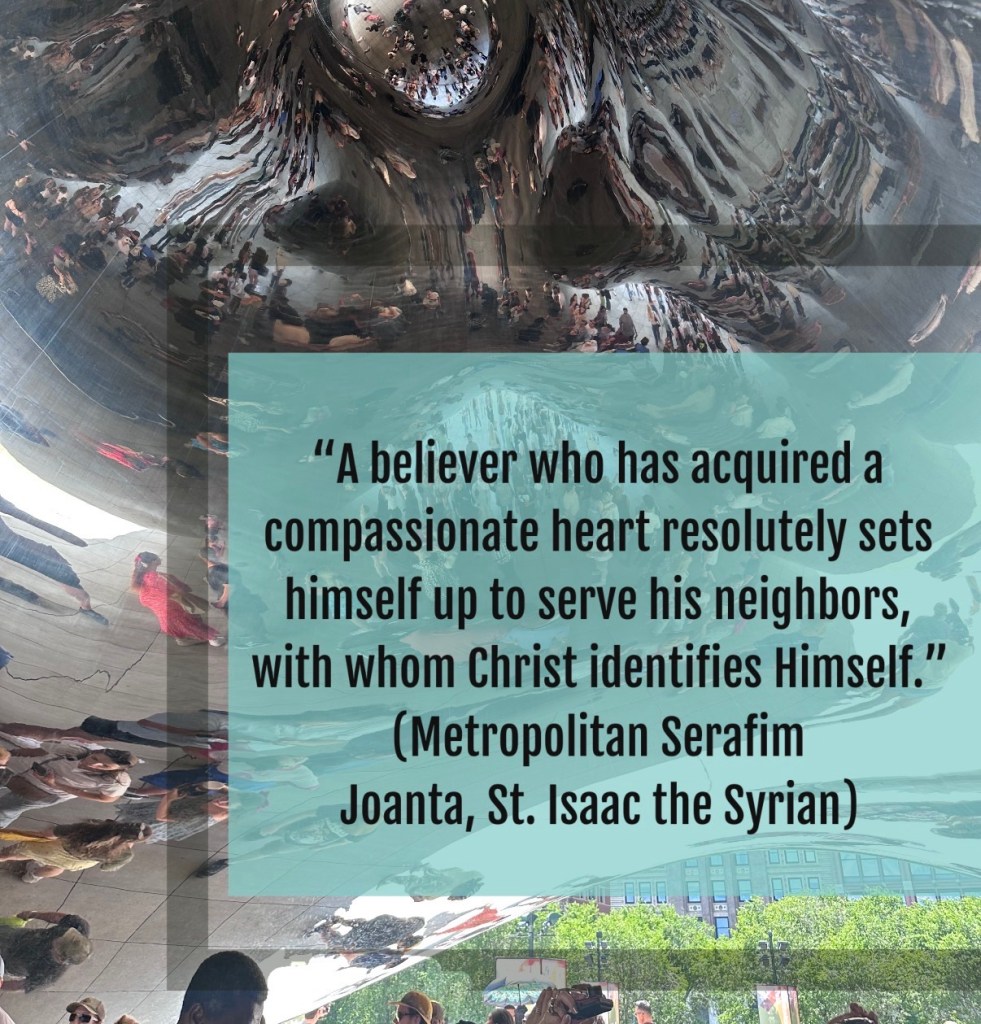
“A compassionate, loving, and merciful heart is a sign of restoration of human nature to its original integrity.
👉Such a heart bears the unity of all humanity and the cosmos.👈
Everything lives in a compassionate heart—people, animals, plants, and all organic and inorganic matter.
Thus, the believer becomes like God.
Like Christ, he is no longer separated from anything or anyone, because he bears all things within himself. Nothing is external and alien to him anymore, and he is not indifferent to anything anymore.
❤️He feels responsible for everyone and for everything that happens in humanity and in the universe. human nature to its original integrity.❤️…A believer who has acquired a compassionate heart resolutely sets himself up to serve his neighbors, with whom Christ identifies Himself.”
—Metropolitan Serafim Joanta, St. Isaac the Syrian
The past several months, I have stepped away from my regular social media engagement. At first, I swore it off completely. But now, I occasionally get on there with blog posts or family updates.
Besides my brain being a little quieter, I’ve noticed that I don’t “think” in potential posts anymore. So sad that many of my treasured moments were sabotaged by my distracted mind forming the very best words and framing the very best photo, instead of being in the moment for the moment’s sake.
I’ve also noticed that I don’t take nearly as many photos of myself. It’s extremely obvious when I scroll through photos on my phone. And as I happen across the pics of my over-practiced poses, a needle of embarrassment pricks me. I turned the camera my way far too many times.
Honestly, it makes me a little sick to think about how trapped I was in the “selfie” world. And it makes me all the more conscious of my daughter towing the edge of it, and how I might help her.
I am not saying I will never take a selfie again, but I am fully aware of the direction it sends me if I were to grow the habit again.
What can I do, I wonder, to not fall for it? How can I help my daughter navigate the temptation?
It’s not real. It’s not healthy. And it’s sub-human, totally focused inward, surface, and empty. Humans are made for connection, not mirror reflections.
Self-focus, self-promoting, selfie, self-ick.
Stepping away from social media has been one way I’ve stepped out of myself too.
Sometimes, I meet people and learn bits of their story…at the store, at a traffic light, at work, at school. They are often unexpected—the stories I hear—but I am rarely as moved as I was this week during an encounter with a stranger.
Perhaps, it was because she was a mother who was heartbroken for her child. This mama bear could recognize another who’d surrendered the fight as pointless, even at the expense of her child’s well being. She had lost. But it was a far more serious loss than I had ever endured. I had no idea how to respond, and when I did, it seemed so hollow, so cheaply spoken from a person so far removed from her brokenness.
She cried. She’d tried. She held the hand of her child who only stared up at me without fully understanding why his mother was talking to me at all. I was just a tongue-tied stranger who happened to cross their paths.
What could I say to make a difference?
All I could think to do was apologize. Not because I had anything to do with her situation, but because I was so so sorry. Sorry that life wasn’t fair, sorry that I couldn’t fix her situation, sorry that her tears were no match to all that was stacked against her.
Her humility and defeat, nearly brought me to my knees. And somehow, she had the politeness to smile and say goodbye. With all she was facing, her decency remained in tact.
Would I be able to do the same in such adversity?
Lord have mercy on the least of us—on the mothers and fathers and children who are at the mercy of others. May they encounter too much gentleness, too much kindness, and strangers who know exactly what to do to make a difference.❤️
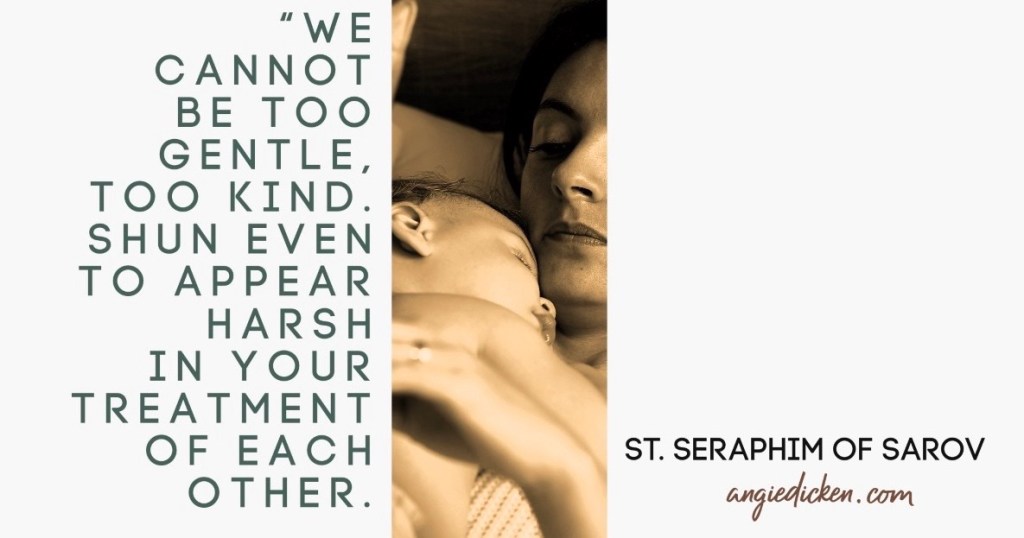
“We cannot be too gentle, too kind. Shun even to appear harsh in your treatment of each other. Joy, radiant joy, streams from the face of one who gives and kindles joy in the heart of one who receives. All condemnation is from the devil. Never condemn each other, not even those whom you catch committing an evil deed. We condemn others only because we shun knowing ourselves. When we gaze at our own failings, we see such a morass of filth that nothing in another can equal it. That is why we turn away, and make much of the faults of others. Keep away from the spilling of speech. Instead of condemning others, strive to reach inner peace. Keep silent, refrain from judgement. This will raise you above the deadly arrows of slander, insult, outrage, and will shield your glowing hearts against the evil that creeps around.”
I have become insecure in this identity of “mother”, and having 3 adult sons and a teen daughter, I thought I would have outgrown it by now.
Perhaps, insecurity is sewn into my fabric. But I also think I’ve been worn thin by how I have lived this life as a mom.
There has been so much identity buzz around women who bear children—for years and years—and it’s been damaging. I have the scars as proof. I know I bought into the buzz (over the past 23 years). And now, nearing the half-century mark of my life, I am floundering as a mom embarking on her fourth journey of raising a teen.
In this age of opinion conquering fact, and truth grinding down to a thin powder of suggestion, I nearly dread this fourth journey because I have already exhausted myself trying to sweep the truth into a beacon to live by. I try old tactics that don’t make sense (anymore).
I know better.
As I think hard on this after another mom-fail this weekend, I know I have learned a few things. But application is killer, for me, anyway.
What have I learned?
Well, first, I must acknowledge that we are in a climate that is certainly unknown to any other mother before us. Our world of AI, social media, and relativism has created a great unknown for any parent of talking children these days. And heading into that at full force, I guess I have learned, am learning:
1. There is no point in referencing “when I was a your age”… this is not the world I ever grew up in, and there is destruction in rose-colored memories of yesteryear (a prevalent mindset in our society). My teen is not naive and easily convinced. And if there is one good thing that has risen up in this next generation, it’s the keen disregard of the answer: “because I said so”. She wants a reason. Now, I must decipher if the reason of any said answer is worth it. Constant thought-processing, internal reflection, and consideration is what a mom must do. Mental laziness is dangerous.
2. The battle doesn’t lie in enforcing rules. As a young mother, I truly did think my rules would produce the outcome of my perfect people—but my people aren’t perfect, I certainly fall short, and while rules aren’t extinct around here, they are the lesser concern. I am desperate for preserving our relationship. And boundaries are where the battle is won. I am growing adults, not followers.
3. Silence can be a tool or a weapon. I have used it more as the latter. I have allowed my own sensitivity to shut down conflict in a passive aggressive refusal to communicate. Yet, I have envied those who only speak when necessary, and I have damaged my relationship with my children by a lack of silence—by a constant, uncontrollable speak. Commentary can become the wedge between a parent and a teen. Wielding this tool and discarding the weapon might be my greatest challenge.
4. Wisdom is not so easy to come by, even though the market sells it that way. This drive me bonkers. This is the deepest scar. The words. The expectations shaping my words. And as I indicated above, the overuse of words from my own mouth. The motherhood genre has contributed to static in each phase of rearing my children. The gurus inflicted opinions that were consumed, by me, as truth. I have been parenting in constant noise of others. I crave silence…beyond its use.
I am sure other mothers out there have more to add…I am sure other mothers out there have conquered the pitfalls better than me.
In fact, I feel like the next step on this fourth journey is starting from a wound.
And really, motherhood is not where the identity lies—it’s in the woman sent on the journey. And as a human, I am in ever need of healing.
It seems, when we are out and about, near the coast or in the heart of the wood, most souls trek toward the water. We stand there, look in, look out, look up. The water draws our attention to the sky, doesn’t it?
The surface dances with the light, swirls with the color, and absorbs the heat of the day—or it is stricken into sheaths of ice in a season.
I especially love this find from one of my recent walks. Wood caught in the dance, forever changed by the colliding elements.
And somehow, the wood, the ice, the water signal to the sky above by their own matter.
How perfect it is then, that on this eve of Theophany, to consider that water brings attention to the heavens. For the Creator reveals His fullness through water tomorrow. And He sanctifies every drop thereafter, the stuff that forever points to the heavens. ☦️
A place I have not visited, but so beautiful. If I was there, how could I not look up?